GameMaker 8 vs Modern Versions: Should You Learn the Classic Edition in 2025?
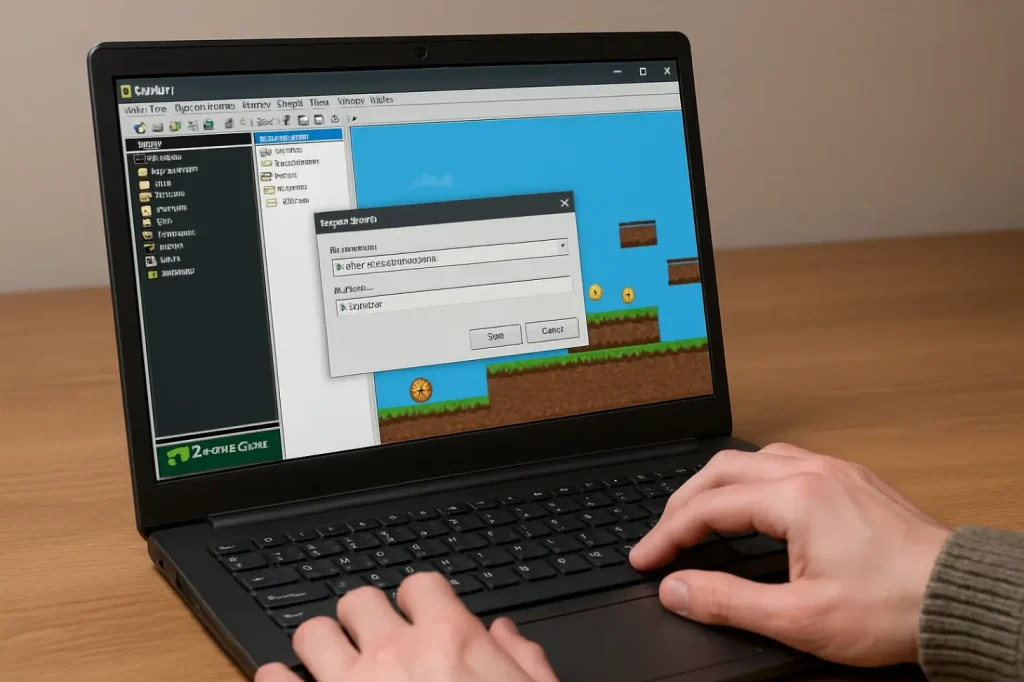
GameMaker 8 occupies a special place in the history of accessible game development. For many creators who began their journey in the late 2000s and early 2010s, this edition became a formative tool thanks to its simplicity, lightweight nature, and easily readable GameMaker Language (GML). In 2025, however, the ecosystem of GameMaker has evolved dramatically. Modern versions deliver advanced features, cross-platform support, GPU-accelerated rendering, and flexible workflows suitable for both beginners and professional studios. This raises a key question: is it still worth learning GameMaker 8 today, especially when modern editions exist?
To answer this, it is necessary to examine practical differences, use cases, limitations and advantages of both generations. Understanding each version’s capabilities helps new developers choose the most effective learning path. While nostalgia and simplicity attract some creators to the classic environment, modern requirements for performance, publishing formats, and long-term maintenance complicate the decision.
Comparing Features: Classic Workflow vs Modern Development
GameMaker 8 was designed in an era when Windows desktop games dominated small-scale development. Its architecture reflects that period: direct, simple, and self-contained. Modern GameMaker, on the other hand, supports multi-platform exports, structured code, visual layers, and improved debugging tools. These upgrades make contemporary development more reliable and scalable.
Yet the charm of GameMaker 8 lies in its minimalism. The interface provides rapid iteration without complex components. Beginners often feel less overwhelmed, and the classic engine allows extremely fast prototyping. Still, one must consider the practical trade-offs, such as the lack of 64-bit support, outdated rendering, and the inability to publish commercially without significant workarounds.
Before diving deeper, it is useful to illustrate several concrete differences. The following table highlights practical aspects of GameMaker 8 and modern GameMaker as of 2025.
Comparative Overview of GameMaker 8 and Modern Versions
Below is a table summarizing the fundamental distinctions. It will help clarify how these differences impact workflow and long-term development.
These distinctions demonstrate how dramatically the GameMaker ecosystem has progressed. Still, developers with limited hardware or those focusing on personal learning projects may find value in the older edition for its speed and simplicity.
Following the table, the key question becomes whether these differences justify revisiting the classic version. Is the nostalgia factor supported by practical advantages?
Learning GameMaker 8 in 2025: Who Benefits and Why
For absolute beginners or hobbyists experimenting with 2D game logic, GameMaker 8 offers a uniquely frictionless environment. Its drag-and-drop system feels intuitive, and the classic GML language is arguably easier to read for newcomers. However, limitations appear quickly once creators try to expand their projects. File I/O, shader integration, optimization tools, and platform export options are all dramatically more restrictive than in the modern version.
There are, however, specific scenarios where learning GameMaker 8 can still make sense. To illustrate when the classic edition may offer real benefits, consider the following context. Below you will find the only list in this article, placed here to serve as a practical midpoint reference.
Before presenting the list, it is essential to note that these cases highlight focused, niche advantages rather than general development recommendations.
Situations Where GameMaker 8 Still Makes Sense in 2025:
- Personal education for understanding the roots and evolution of GML.
- Running or modifying legacy projects created before 2012.
- Teaching extremely young or novice learners with minimal hardware resources.
- Participating in retro-coding challenges or historical game development events.
Each of these examples shows that GameMaker 8 retains specific relevance, but mainly for educational or preservation-oriented purposes. It is not suited for modern commercial development, especially considering export limitations and the absence of modern optimization tools. Developers who begin with the classic version may also face the challenge of relearning several core systems when transitioning to new versions.
Modern GameMaker in 2025: A More Sustainable Learning Path
From a strategic perspective, learning the newest version of GameMaker is far more beneficial for long-term development. The 2025 editions integrate advanced scripting improvements, better asset organization, and cross-platform workflows that mirror industry expectations. GML now resembles modern scripting languages, supporting functions, structs, short lambdas, and enums, which enhance readability and maintainability.
Furthermore, the updated editor includes real-time previews, improved sprite tools, automatic texture management, and support for large-scale projects. These features reduce technical debt and encourage cleaner design principles. A developer who learns the modern environment from the start gains a scalable skill set that can grow with future versions.
Another critical point is community support. The modern GameMaker community is active, producing tutorials, open-source tools, and marketplace assets. By contrast, GameMaker 8 has minimal modern documentation, and most tutorials from that era use outdated best practices. This creates a learning gap for new developers who rely heavily on contemporary support materials.
Conclusion: A Practical Recommendation for Developers in 2025
GameMaker 8 remains a nostalgic and historically significant tool, but in 2025 it is no longer the recommended starting point for serious developers. The modern GameMaker ecosystem offers stronger publishing options, better performance, and a more future-proof learning experience. However, the classic version can still be a useful educational tool, especially for those studying the evolution of GML or maintaining legacy projects.
Realistically, developers should invest their learning time in the current version of GameMaker, using GameMaker 8 only for niche or historical purposes. With modern cross-platform features, improved language structures, and powerful debugging tools, the contemporary engine provides a far more sustainable and professional foundation. Learning it now ensures adaptability, longevity, and compatibility with industry standards