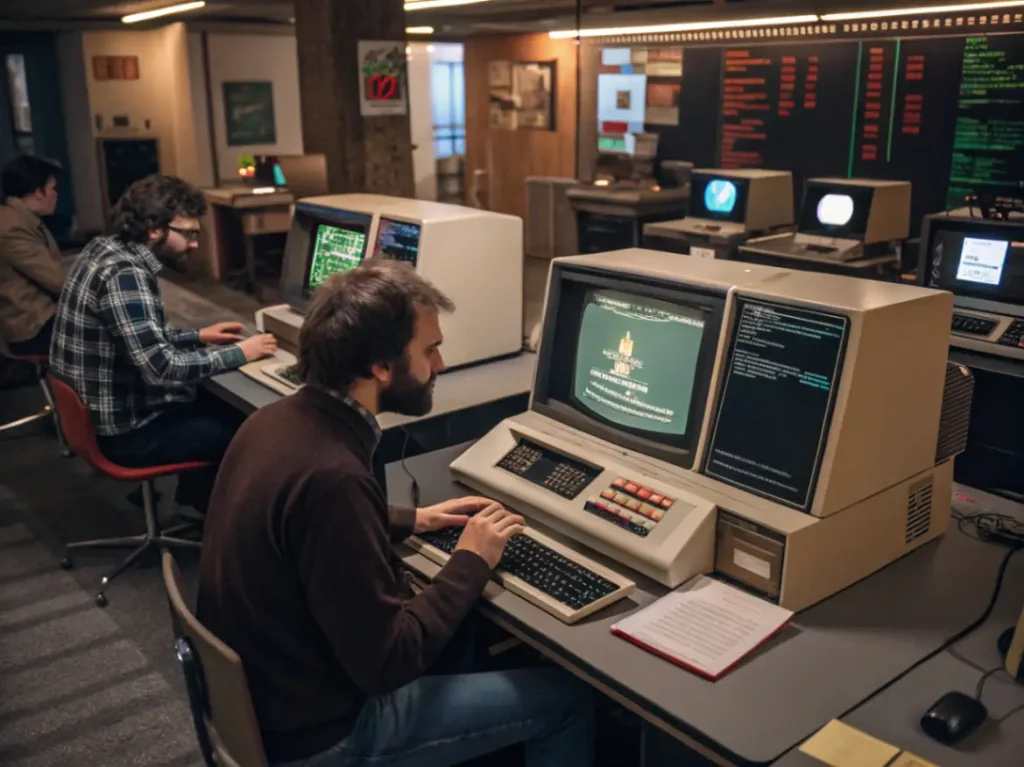
The retro gamedev scene in 2026 looks different from what analysts predicted five years ago. Instead of fully migrating to high-end engines and cloud-based pipelines, a noticeable segment of indie developers has returned to older tools. One of the most surprising comebacks is GameMaker 8. Despite its age, this classic 2D game engine is being rediscovered by pixel artists, solo developers, and hobbyists who value speed, simplicity, and full creative control. The renewed interest in GameMaker 8 reflects broader trends in retro game development, lightweight game engines, and low-spec PC gaming.
The Return of Retro Game Development Tools
Retro game development is no longer a niche hobby. In 2026, it is a thriving ecosystem supported by indie marketplaces, community-driven platforms, and social media visibility. Developers are deliberately embracing pixel art games, 2D platformers, and minimalist mechanics. In this context, older tools such as GameMaker 8 offer a focused environment without the distractions of modern engine complexity.
Unlike contemporary engines packed with 3D rendering pipelines, live service integrations, and monetization systems, GameMaker 8 remains centered on 2D game creation. This limitation is not seen as a weakness. Instead, it aligns perfectly with the current demand for authentic retro aesthetics. Developers searching for “best engine for 2D pixel art games” or “lightweight game engine for old PC” often rediscover GameMaker 8 in forums and developer communities.
The appeal lies in constraints. When tools impose boundaries, creativity often increases. Retro developers are choosing software that supports rapid iteration, small file sizes, and straightforward exports. GameMaker 8 embodies these characteristics. It launches instantly, runs smoothly on outdated hardware, and does not require constant updates or online authentication.
Another factor driving this comeback is digital preservation. As more developers explore abandoned or discontinued software, they realize that older engines still provide reliable functionality. In a market saturated with subscription models and feature bloat, stability has become a competitive advantage.
GameMaker 8 vs Modern 2D Game Engines
Before understanding why developers return to GameMaker 8, it is important to compare it with modern 2D game engines such as Unity, Godot, and the latest GameMaker versions. Each engine offers advantages, but the differences clarify why retro-focused creators prefer simplicity.
Below is a structured comparison of GameMaker 8 and contemporary 2D development tools.
| Feature | GameMaker 8 | Modern Game Engines (Unity, Godot, GMS2) |
|---|---|---|
| System Requirements | Extremely low | Moderate to high |
| Installation Size | Very small | Large (often several GB) |
| Learning Curve | Beginner-friendly | Moderate to steep |
| Built-in 2D Tools | Focused and simple | Advanced but complex |
| Export Options | Limited | Multiple platforms |
| Update Frequency | None | Frequent updates |
| Performance on Old PCs | Excellent | Variable |
This table highlights a key insight: GameMaker 8 excels in environments where minimalism matters. For developers creating retro PC games or targeting low-end systems, performance consistency is more important than cross-platform deployment.
Modern engines offer powerful features, including physics simulations, shader support, and console exports. However, these capabilities come at the cost of complexity. New developers searching for “easy engine for 2D platformer” often find modern engines overwhelming. GameMaker 8, by contrast, provides a controlled, self-contained development experience.
After examining the comparison, it becomes clear that the engine’s limitations are strategic strengths for a certain audience. Developers who prioritize speed and offline independence see GameMaker 8 not as outdated software, but as a focused tool designed for a specific creative philosophy.
Why Indie Developers Prefer GameMaker 8 in 2026
The renewed popularity of GameMaker 8 is not accidental. It is driven by practical advantages that resonate with modern indie developers. When asked why they returned to the engine, creators often mention the same recurring themes.
The most common reasons include:
- Instant startup and near-zero system load.
- A distraction-free interface optimized for 2D design.
- Reliable performance without forced updates.
- Strong legacy documentation and archived tutorials.
- A nostalgic workflow that inspires creativity.
Each of these points reflects broader frustrations with current software ecosystems. Indie developers are increasingly wary of subscription-based tools and constantly shifting user interfaces. GameMaker 8 offers stability. The environment remains exactly as it was, meaning no sudden feature removals or licensing changes.
Another reason is speed of prototyping. Developers experimenting with game mechanics can assemble functional prototypes in hours rather than days. For game jams, short projects, or hobby experimentation, this efficiency is critical. Searching for “fast prototyping engine 2D” often leads developers back to classic GameMaker discussions.
After considering these factors, it becomes evident that GameMaker 8 supports a workflow centered on creativity rather than technical overhead. Its simplicity reduces cognitive load, allowing designers to focus entirely on gameplay and art direction.
The Role of Nostalgia in Retro Game Design
Nostalgia plays a measurable role in software adoption. In the context of retro game development, nostalgia operates on two levels: aesthetic and procedural. Developers not only want games that look retro; they want to build them using tools that feel authentic.
GameMaker 8 was widely used during the rise of early indie hits in the late 2000s and early 2010s. For many developers, it was their first introduction to game creation. Returning to it in 2026 is both a technical decision and an emotional one.
This nostalgia aligns with market trends. Players actively search for “retro indie games,” “pixel art platformers,” and “old-school PC games.” When creators use tools from that era, they often reproduce the subtle design patterns and technical quirks that define authentic retro experiences. Sprite management, room transitions, and collision systems in GameMaker 8 create distinctive gameplay rhythms.
However, nostalgia alone does not sustain long-term usage. The engine’s continued relevance depends on its practical viability. The fact that GameMaker 8 still performs reliably on modern operating systems, often through compatibility modes, reinforces its utility beyond sentimental value.
In many ways, nostalgia acts as the entry point, while functionality ensures retention. Developers may return out of curiosity, but they stay because the engine remains efficient.
Technical Simplicity and Performance Advantages
From a technical perspective, GameMaker 8 represents a lightweight architecture rarely seen in modern engines. Its executable footprint is small, its runtime environment is predictable, and its resource management is straightforward. For developers targeting low-end hardware or compact downloadable games, these characteristics matter significantly.
Search queries such as “optimize 2D game for low spec PC” often surface discussions about minimizing engine overhead. GameMaker 8 inherently reduces this overhead because it was built in an era where system limitations were stricter. As a result, projects developed within it tend to maintain modest performance demands.
Another overlooked advantage is offline independence. Many modern engines require account logins, license verification, or cloud-based asset management. GameMaker 8 operates entirely offline. This makes it appealing to developers concerned about digital ownership and long-term accessibility.
The simplicity also accelerates debugging. With fewer abstraction layers and integrated systems, identifying logic errors is often faster than in complex node-based or script-heavy engines. Developers building classic 2D shooters or RPG prototypes frequently emphasize how quickly they can iterate and test.
In addition, the limited feature set prevents scope creep. When an engine offers endless possibilities, projects often expand beyond manageable boundaries. GameMaker 8 naturally encourages focused design, which aligns well with the philosophy of retro game development.
Community Revival and Preservation Culture
An engine’s longevity depends on its community. In 2026, GameMaker 8 benefits from a surprising resurgence in online forums, Discord servers, and archival projects. Enthusiasts have preserved tutorials, example projects, and documentation, ensuring that new developers can still learn the tool effectively.
Retro development communities often prioritize preservation and knowledge sharing. Instead of competing over cutting-edge features, they exchange optimization tips, sprite design techniques, and classic scripting patterns. This collaborative culture supports long-term sustainability.
Additionally, content creators on video platforms are producing tutorials titled “How to Make a Retro Game in GameMaker 8” and “Why I Switched Back to GameMaker 8.” These videos rank well for SEO keywords such as “retro game engine 2026” and “GameMaker 8 tutorial,” driving further interest.
The revival is also connected to digital minimalism. Many creators seek tools that are stable and self-contained. By choosing GameMaker 8, they step outside rapid update cycles and shifting business models. This independence resonates with developers who value creative autonomy.
Ultimately, community momentum reinforces technical strengths. An engine survives not because it is modern, but because it remains usable, documented, and supported by passionate users.
Conclusion
In 2026, the return to GameMaker 8 is not a random nostalgia trend. It reflects a deeper shift in indie game development toward simplicity, stability, and creative focus. While modern engines dominate large-scale production, there is a growing demand for lightweight 2D game engines that prioritize performance and ease of use.
GameMaker 8 stands at the intersection of retro authenticity and practical efficiency. Its low system requirements, straightforward interface, and offline independence make it uniquely suited for pixel art games and small indie projects. Combined with an active preservation community, it continues to offer value well beyond its original release era.
As retro game development expands and developers search for focused, distraction-free tools, GameMaker 8 remains a compelling option. Sometimes innovation is not about adding more features, but about rediscovering the power of simplicity.