Finishing a game is half the job; choosing where it lives is the other half. Steam dominates PC distribution, itch.io owns the experimental fringe, and consoles promise prestige with paperwork attached. Each storefront has its own economics, audience expectations, and hidden labor costs — and the right answer for your game depends on genre, scope, and how much marketing you can do yourself.
The wrong store choice rarely kills a game outright. It does something quieter: it buries a good game in the wrong audience and lets everyone conclude the game was the problem.
Steam: the center of gravity
Steam is where PC players already are, and its recommendation algorithm can surface a game no one has heard of — if the signals are right. The entry fee is a flat $100 per game (recoupable after $1,000 in revenue), and Valve takes 30% of sales, dropping to 25% and 20% at high revenue tiers. The real currency on Steam is the wishlist: games launching with tens of thousands of wishlists get algorithmic amplification; games launching with hundreds get a quiet funeral.
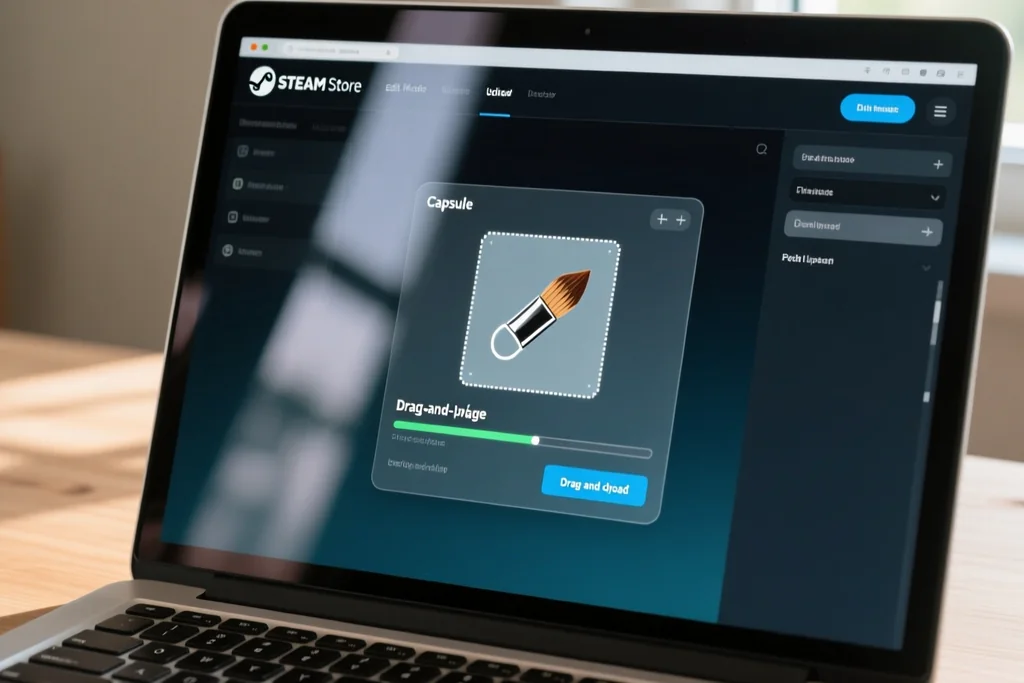
Practical implication: a Steam launch needs a public page months before release, a demo during a festival like Steam Next Fest, and a capsule image that survives being shrunk to thumbnail size.
itch.io: freedom with a smaller room
itch.io is the opposite philosophy: no entry fee, pay-what-you-want pricing, an adjustable revenue share (many developers set it far below 30%), and instant publishing. It is the natural home for jam games, experimental work, adult content, and prototypes finding their first audience. The ceiling is discovery — itch.io's audience is passionate but small, and few games earn their living there alone.
The smart play for most indies is both: itch.io during development to build community and gather feedback, Steam for the commercial launch.
Consoles: prestige, process, patience
Nintendo Switch, PlayStation and Xbox all run indie programs, and all three involve developer registration, certification requirements (the infamous "lotcheck" and TRC processes), and often a devkit. Expect the certification and porting work to add months, not weeks. The payoff is real: console audiences buy at full price more readily, and a Switch version still carries a discovery halo for the right genres — cozy, pixel-art, and story games overperform there consistently.
| Store | Entry cost | Revenue share | Discovery strength | Best fit |
|---|---|---|---|---|
| Steam | $100 per game | 70–80% to dev | Algorithmic, wishlist-driven | Most commercial PC indies |
| itch.io | Free | Dev sets it | Community-driven, small | Experiments, jams, early builds |
| Epic Games Store | Free | 88% to dev | Weak organic, strong if featured | Games seeking exclusivity deals |
| Nintendo / PS / Xbox | Devkit + certification | ~70% to dev | Curated storefronts | Cozy, pixel-art, story genres |
| GOG | Free, curated | 70% to dev | Niche but loyal | DRM-free audience, classics appeal |
Steam, itch.io or Console: Where to Publish Your Indie Game
Related guide on this topic.
A sequencing strategy that works
- Prototype publicly on itch.io — feedback and a first community cost nothing.
- Open the Steam page early — the day your game looks presentable in screenshots, wishlists start accruing.
- Launch on Steam first, port to consoles after the PC version proves itself and funds the certification labor.
- Treat each store as a separate launch with its own capsule art, trailer cut, and announcement plan — copy-pasting between storefronts leaves money on the table.
Distribution is not a single decision but a sequence. The indies who treat it that way — itch.io, then Steam with a wishlist runway, then consoles — consistently outperform identical games that shipped everywhere on the same day with the same assets.