Every few months, a post appears on a game development forum asking the same question: should I use Godot for my commercial project, or am I setting myself up for pain? The answers are always a mix of enthusiastic endorsement and cautious warning, and neither side is wrong — they are just answering for different versions of Godot, different project scopes, and different definitions of "commercial." The engine that launched Godot 4.0 in early 2023 was ambitious but incomplete, a foundation without a roof. The engine that exists in late 2026, after a steady stream of point releases and the landmark 4.3 update, is a different animal — but different does not automatically mean sufficient. Whether Godot 4 is ready for your commercial release depends on what you are building, where you are shipping it, and how much risk tolerance your timeline allows. The honest answer is not yes or no — it is a conditional yes with specific caveats that every developer should understand before committing months of work to an engine that is still, technically, proving itself.
The journey from Godot 4.0 to 4.3
Godot 4.0 was a rewrite. Not a refinement — a fundamental reimagining of the engine's architecture, rendering pipeline, and scripting language. The transition from Godot 3.x to 4.0 was so significant that projects built in 3.x could not be directly upgraded; they required manual migration of code, assets, and scene structures. This was a bold move for an open-source engine competing against Unity and Unreal, both of which maintain backward compatibility across major versions.
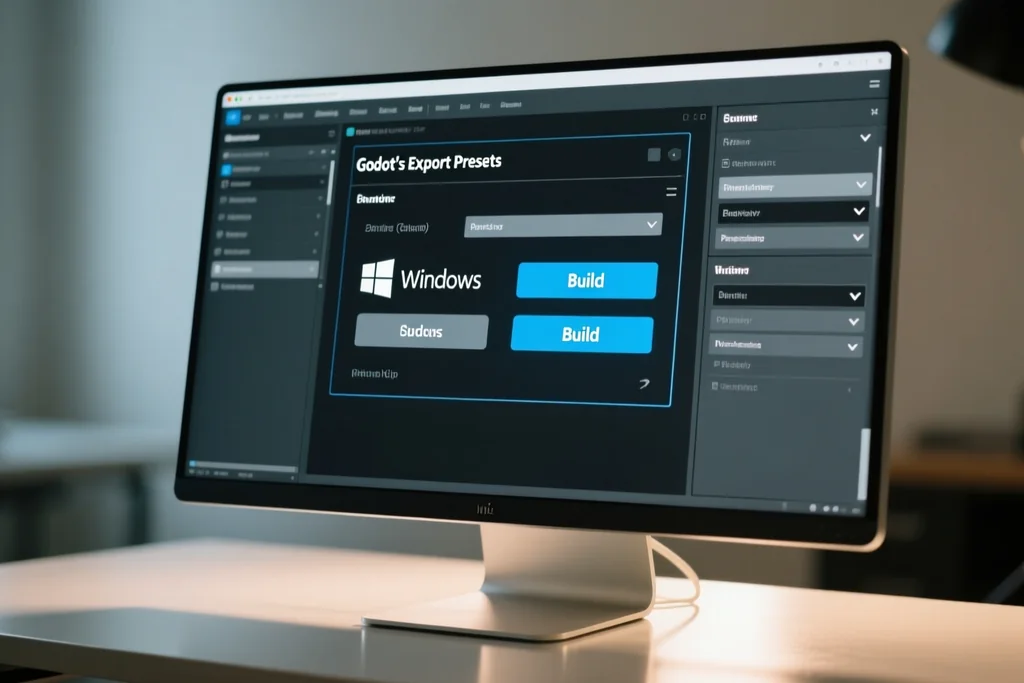
The 4.0 release shipped with a new Vulkan-based rendering engine, a rewritten physics system, a new GDScript 2.0, and an overhauled editor. But it also shipped with bugs, missing features that had been present in 3.x, and performance issues that made it unsuitable for some commercial projects. The community response was split: some developers embraced the new architecture and accepted the rough edges, while others stayed on 3.x and waited for maturity.
Point releases and incremental maturity
The path from 4.0 to 4.3 was not a single leap but a series of measured steps. Version 4.1 addressed stability issues and improved the rendering pipeline's performance on lower-end hardware. Version 4.2 introduced significant improvements to the tilemap system, the animation tools, and the GDExtension interface for C++ and other language bindings. Version 4.3, released in 2024, was the update that many developers had been waiting for — it introduced the new rendering optimizations, improved the 2D lighting system, overhauled the export templates, and addressed dozens of long-standing bugs that had made commercial deployment risky.
By 2026, the engine has received additional patch releases and minor updates that have further stabilized the platform. The question is no longer "is Godot 4 stable enough to use?" — it is "is Godot 4 stable enough to bet a commercial release on?"
Rendering: where Godot stands in 2026
Rendering is the area where Godot 4 has made the most visible progress and where it still faces the most scrutiny. The Vulkan renderer that shipped with 4.0 was a massive upgrade over the OpenGL renderer in 3.x, but it was also new code with new problems.
The Forward+ renderer
Godot 4's primary rendering pipeline is Forward+, a forward rendering approach with clustered lighting that supports dozens of real-time lights in a scene without the performance penalty of traditional forward rendering. In 2026, the Forward+ renderer has been optimized to the point where it can handle moderately complex 3D scenes — indoor environments with dynamic lighting, outdoor scenes with global illumination, and particle effects — at acceptable frame rates on mid-range hardware.
The limitation is in the ceiling. Forward+ in Godot does not match the visual fidelity or performance of Unreal's Nanite and Lumen, or Unity's HDRP with adaptive probe volumes. For a stylized 3D game with a deliberate art direction — cel-shaded, low-poly, or hand-painted textures — Godot's renderer is more than sufficient. For a game that aims for photorealistic environments with complex material interactions, Godot is not in the same league as its commercial competitors.
The mobile and WebGL renderers
Godot offers a dedicated mobile renderer optimized for Android and iOS, and a WebGL renderer for browser-based games. Both have seen significant improvements through 4.1, 4.2, and 4.3. The mobile renderer supports most of the Forward+ features at a reduced quality, and the WebGL renderer handles 2D games and simple 3D games in the browser with acceptable performance.
The mobile renderer's weakness is in high-end 3D mobile games. For 2D mobile games and casual 3D, it performs well. For 3D games that push mobile hardware to its limits — large open worlds, complex shaders, high polygon counts — the mobile renderer is not as optimized as Unity's URP, which has been refined for mobile for over a decade.
2D rendering: Godot's traditional strength
2D has always been Godot's strongest area, and 4.x continues this tradition. The 2D rendering system supports 2D lights, shadows, normal maps on sprites, and a 2D physics engine that is separate from 3D. The CanvasLayer system handles parallax scrolling, screen-space effects, and UI rendering efficiently. For 2D games — platformers, top-down RPGs, puzzle games, visual novels — Godot's 2D rendering is competitive with Unity's and arguably more intuitive to use.
GDScript 2.0 and language ecosystem
The scripting experience is central to any game engine, and Godot's approach is unique. GDScript, the engine's built-in scripting language, was redesigned for 4.0 with static typing, better performance, and a cleaner syntax. In 2026, GDScript 2.0 is mature, well-documented, and fast enough for most game logic.
GDScript strengths and limitations
GDScript is Python-like in syntax, which makes it accessible to beginners and productive for experienced developers. The static typing system, introduced in 4.0 and refined in subsequent versions, catches errors at compile time and improves performance by allowing the engine to optimize typed code. The language is deeply integrated with Godot's node system — signals, exports, and editor integration work seamlessly with GDScript in a way that external languages cannot match.
The limitation is performance in hot loops. GDScript is interpreted, and while the static typing system improves speed, it does not match the performance of compiled C++ or C#. For computationally intensive tasks — procedural generation, complex physics calculations, large-scale data processing — GDScript may not be fast enough, and developers need to use C++ through GDExtension or C# through the .NET module.
C# and .NET support
Godot 4's C# support has been one of the most improved areas since the 4.0 release. The .NET 8 integration, finalized in the 4.2 and 4.3 updates, provides full C# support with access to the .NET ecosystem. C# in Godot is not a second-class citizen — it has full access to the engine API, editor integration, and debugging tools. For developers coming from Unity, where C# is the primary language, Godot's C# support makes the transition significantly easier.
The limitation is that C# increases build size and adds a runtime dependency. For small 2D games where a 20 MB build in GDScript becomes a 50 MB build with the .NET runtime, the size difference matters for mobile and web deployment. The trade-off is performance and ecosystem access — the .NET library ecosystem is vast, and C# code runs faster than GDScript for compute-heavy tasks.
GDExtension for C++ and other languages
GDExtension is Godot's interface for compiling native code — C++, Rust, Python — and using it within the engine. The 4.2 and 4.3 updates stabilized the GDExtension API, making it reliable for production use. For developers who need maximum performance — custom rendering, complex AI, physics simulations — GDExtension with C++ is the path. For developers who want to use Rust for safety and performance, community bindings exist and are maturing.
3D capabilities: the remaining question mark
While Godot 4's 2D capabilities are unquestionably commercial-ready, its 3D capabilities remain the subject of debate. The engine can produce 3D games, and several have been shipped commercially, but the gap between what Godot 4 can do in 3D and what Unity and Unreal can do is still visible in certain areas.
What works well in 3D
Godot 4 handles stylized 3D games with ease. Low-poly art styles, cel-shaded graphics, and hand-painted textures all render beautifully in the Forward+ pipeline. The engine's scene system, with its node-based architecture, is intuitive for building 3D levels, and the editor's 3D viewport is responsive and capable. Physics — both rigid body and character controller — work reliably for standard gameplay mechanics. Animation through the AnimationPlayer and the skeletal animation system is functional and well-integrated.
Where 3D falls short
The areas where Godot 4's 3D capabilities are insufficient for commercial-grade projects are specific but important. The particle system, while improved, does not match the flexibility and visual quality of Unity's VFX Graph or Unreal's Niagara. There is no equivalent to Unreal's Nanite for handling massive geometry, or Lumen for real-time global illumination at the quality level of AAA engines. The post-processing stack is adequate but not as refined as its competitors — effects like motion blur, screen-space reflections, and volumetric fog exist but are less polished.
For a commercial 3D game that aims to compete visually with titles built in Unity or Unreal, these limitations are real. For a commercial 3D game with a deliberate art direction that does not rely on cutting-edge rendering technology, Godot is viable.
The asset pipeline and editor experience
The day-to-day experience of working in an engine — importing assets, setting up scenes, iterating on gameplay — is where Godot 4 shines or struggles depending on the task. The editor has been significantly improved in 4.x, and in 2026 it is a mature, capable development environment.
Scene and node system
Godot's scene system is its defining feature. Everything in Godot is a node — a sprite, a collision shape, a camera, a light — and nodes are organized in a tree structure. Scenes are collections of nodes that can be instanced and reused. This system is elegant, intuitive, and scales well from small projects to large ones. The ability to create a reusable scene — a player character, an enemy, a level chunk — and instance it multiple times is built into the engine's core, and it works flawlessly.
Asset import
Asset import in Godot 4 has been streamlined. Models in glTF format import with materials, animations, and textures intact. The importer handles FBX through a converter, and the results are generally reliable. Sprite sheets can be imported and sliced, though the tooling is not as feature-rich as Unity's Sprite Editor. Audio import supports standard formats and provides basic compression options.
The weakness is in the asset library. Godot's Asset Library, the community-driven marketplace for plugins and assets, is smaller than Unity's Asset Store or Unreal's Marketplace. Many of the available assets are free, which is a strength, but the selection of production-ready, commercial-grade assets is limited. Developers building complex games may need to build more from scratch than they would in Unity or Unreal.
Platform export and deployment
Shipping a game is the ultimate test of an engine's commercial readiness, and export is where many open-source engines have historically fallen short. Godot 4's export system has been significantly improved, but it still has platform-specific quirks that developers need to be aware of.
To evaluate Godot's commercial readiness across platforms, it helps to compare the export stability and feature support for each target that a commercial project might need.
Export readiness varies significantly between platforms, and the gap between what Godot supports well and where it struggles is a key factor in determining whether the engine is ready for a specific commercial project.
| Platform | Export stability | Known issues | Commercial viability |
|---|---|---|---|
| Windows (x86_64) | Excellent | None significant | Fully viable |
| Linux (x86_64) | Excellent | None significant | Fully viable |
| macOS (Universal) | Good | Code signing and notarization require manual setup | Viable with configuration |
| Android | Very good | APK signing setup; large texture compression needs care | Viable |
| iOS | Good | Requires macOS for build; Xcode project export works | Viable with macOS |
| WebGL | Good | Build size optimization needed; some shader features unsupported | Viable for simple games |
| Steam Deck | Excellent | Runs as Linux build; controller mapping needed | Fully viable |
| Nintendo Switch | Limited | Requires NDA access; porting via third-party | Possible but not native |
| PlayStation | Limited | Requires publisher access; no native support | Possible through porting partners |
| Xbox | Limited | Requires ID@Xbox access; no native support | Possible through porting partners |
The export picture shows that Godot 4 is fully viable for PC, mobile, and web releases — which covers the vast majority of indie commercial projects. Console support remains the engine's weakest area, not because of technical limitations but because of licensing and NDA requirements that prevent open-source engines from including native console export. Developers who want to ship to Switch, PlayStation, or Xbox need to work with porting companies that have the necessary licensing, which adds cost and complexity.
Commercial games already shipped in Godot 4
The strongest evidence of an engine's commercial readiness is not its feature list but the games that have been successfully built and released using it. By 2026, several notable commercial games have been shipped in Godot 4, and analyzing their scope, platform, and reception provides the most concrete measure of the engine's capabilities.
Games like "Brotato," a survivor-style roguelite that achieved significant commercial success on Steam, demonstrated that Godot 4 can handle fast-paced 2D gameplay with hundreds of on-screen entities. "Cassette Beasts," a creature-collection RPG, showcased the engine's ability to handle a large 2D game with complex systems, dialogue, and world design. "Sonic Colors: Ultimate" used Godot for its remaster, proving that the engine can handle IP-licensed commercial projects.
These games share common characteristics: they are primarily 2D or use stylized 3D, they target PC and console, and they were built by teams that chose Godot deliberately — not as a budget option, but as the right tool for their specific needs. No AAA studio has shipped a major title in Godot, and none is likely to in the near future. The engine's commercial sweet spot is indie and mid-budget projects where the team values open-source licensing, zero cost, and a lightweight workflow over the raw power and ecosystem of Unity or Unreal.
What still holds Godot back
Despite the progress, there are areas where Godot 4 in 2026 is not yet at the level required for certain types of commercial releases. Understanding these limitations is essential for making an informed decision, because choosing Godot for a project that requires features it lacks will cost more time than it saves.
Before committing to Godot 4 for a commercial project, developers should be aware of the specific limitations that remain in 2026 and that may affect their development timeline or final product quality.
Remaining limitations of Godot 4 that affect commercial projects:
- Console export requires third-party porting — there is no native Switch, PlayStation, or Xbox export in Godot. Console releases require working with companies like W4 Games or other porting partners, which adds cost and development time. This is a licensing limitation, not a technical one, but it affects the project timeline.
- No built-in multiplayer networking solution on par with competitors — Godot's high-level multiplayer API works for simple peer-to-peer games, but there is no equivalent to Unity's Netcode for GameObjects or Unreal's replication system for authoritative server-based multiplayer. Developers building multiplayer games need to integrate third-party solutions or build their own.
- Asset library is smaller than competitors — the Godot Asset Library has grown, but it lacks the breadth of production-ready assets available on the Unity Asset Store or Unreal Marketplace. Developers building complex systems — inventories, dialogue trees, quest systems — may need to build more from scratch.
- Rendering ceiling for photorealistic 3D — Godot's Forward+ renderer is capable but not competitive with Unreal's Nanite/Lumen or Unity's HDRP for photorealistic visuals. Games aiming for AAA visual fidelity will hit a ceiling that the engine cannot breach.
- Documentation gaps in advanced features — while the core documentation is comprehensive, advanced topics — custom rendering, GDExtension best practices, performance profiling — have thinner coverage. Developers pushing the engine's boundaries will rely more on community knowledge than official docs.
- Smaller talent pool for hiring — a studio that needs to hire Godot developers will find fewer candidates than Unity or Unreal developers. This is a business limitation that affects team scaling for commercial projects.
- Mobile ad network integration — for free-to-play mobile games that rely on ad revenue, the integration of ad SDKs in Godot requires more manual work than in Unity, which has native plugins for major ad networks. This adds development time for mobile F2P projects.
- No first-party analytics or crash reporting — Unity and Unreal offer integrated analytics and crash reporting services. Godot developers need to integrate third-party solutions like GameAnalytics or Sentry manually.
These limitations do not make Godot unsuitable for commercial development — they define the boundary of where it is suitable. A solo developer building a 2D platformer for Steam will encounter none of these limitations. A studio building a 3D multiplayer game targeting consoles will encounter most of them. The developer who understands this boundary before starting development will make the right choice; the one who discovers it mid-project will face costly pivots.
Signs that Godot 4 is ready for your project
The limitations above define where Godot is not ready. Equally important is recognizing the signs that Godot is not just ready but actively the best choice for a specific project. These signs are not about the engine's quality in isolation but about the alignment between the engine's strengths and the project's requirements.
For developers evaluating whether Godot 4 aligns with their commercial project, the following indicators suggest a strong fit where the engine will not only work but provide a tangible advantage over alternatives.
Indicators that Godot 4 is the right choice for a commercial project:
- The game is primarily 2D — Godot's 2D tooling is world-class, with a dedicated 2D rendering path, 2D physics, tilemaps, and 2D lights. For 2D games, Godot matches or exceeds Unity in workflow efficiency and matches Unreal in rendering quality for stylized 2D art.
- The budget does not accommodate engine licensing — Godot is free under the MIT license, with no royalties, no subscription, and no revenue threshold. For a developer with a tight budget, the zero cost is not just a convenience — it is a business advantage that allows the project to reach profitability sooner.
- The team values open-source licensing — studios that need to modify the engine, audit its code, or ensure long-term access without vendor lock-in benefit from Godot's MIT license. The engine can be forked, modified, and redistributed without restriction.
- The target platforms are PC, mobile, and web — Godot's export for Windows, macOS, Linux, Android, iOS, and WebGL is stable and well-documented. If the project does not require console export, the platform support is sufficient.
- The art style is stylized rather than photorealistic — cel-shading, low-poly, pixel art, and hand-painted styles all work beautifully in Godot. The engine's rendering is optimized for these styles, and the lack of AAA rendering features is irrelevant.
- The team is comfortable with GDScript or C# — developers who know Python-like languages will find GDScript intuitive, and Unity developers can transition to C# in Godot with minimal friction. The language ecosystem, while smaller than Unity's, is sufficient for most game logic.
- The project scope is manageable by a small team — Godot's workflow is optimized for small teams and solo developers. The scene system, the lightweight editor, and the fast iteration cycle favor projects where one to five developers are building the entire game.
- The game does not require complex multiplayer infrastructure — for single-player games or simple local multiplayer, Godot is ideal. The absence of a built-in authoritative networking solution is only a problem for online multiplayer games.
The presence of three or more of these indicators in a project description is a strong signal that Godot 4 is not just viable but optimal. The developer who recognizes this alignment before starting will save time, money, and frustration — and will ship a game that is built on a foundation that will not change licensing terms, introduce unexpected fees, or disappear if a company decides to change its business model.
The pricing advantage and what it means commercially
Godot's pricing model is its most frequently cited advantage, and it deserves a more nuanced examination than "it is free." The MIT license under which Godot is released means that the engine can be used for commercial projects without any cost, royalty, or restriction. The source code is available, modifiable, and redistributable. There is no revenue threshold, no subscription tier, and no feature gating.
For a commercial project, this has implications beyond the initial cost. A game built in Godot has a lower break-even point than the same game built in Unity Pro or Unreal with royalties. A game that earns $100,000 in Godot keeps $100,000 (minus platform fees and taxes). The same game in Unity Pro costs $2,200 per year in licensing, and in Unreal, it keeps everything until $1 million but then pays 5% on revenue above that threshold.
The long-term implication is more significant. Unity and Unreal are owned by companies that can change their pricing models — Unity demonstrated this in 2023 with its controversial runtime fee announcement, which was later modified but damaged developer trust. Godot, as an open-source project governed by a non-profit foundation, cannot retroactively change its licensing terms. The MIT license is irrevocable. A game built in Godot today will never face a future where the engine's licensing becomes unfavorable.
Community and long-term sustainability
The long-term viability of any engine depends on its community, and this is where Godot's open-source nature is both a strength and a vulnerability. The community is passionate, growing, and increasingly professional. The Godot Foundation, established to manage the project's governance and funding, provides a level of institutional stability that pure community projects often lack. Corporate sponsors — including Google, Microsoft, and Epic Games — provide funding that supports full-time development of the engine.
The vulnerability is in the dependency on volunteer contributors for certain features. While the core engine is developed by paid contributors, many features and plugins are maintained by volunteers who may not have the bandwidth to address issues quickly. This means that bug fixes for less-popular features may take longer than in a commercial engine where paid developers are assigned to address them.
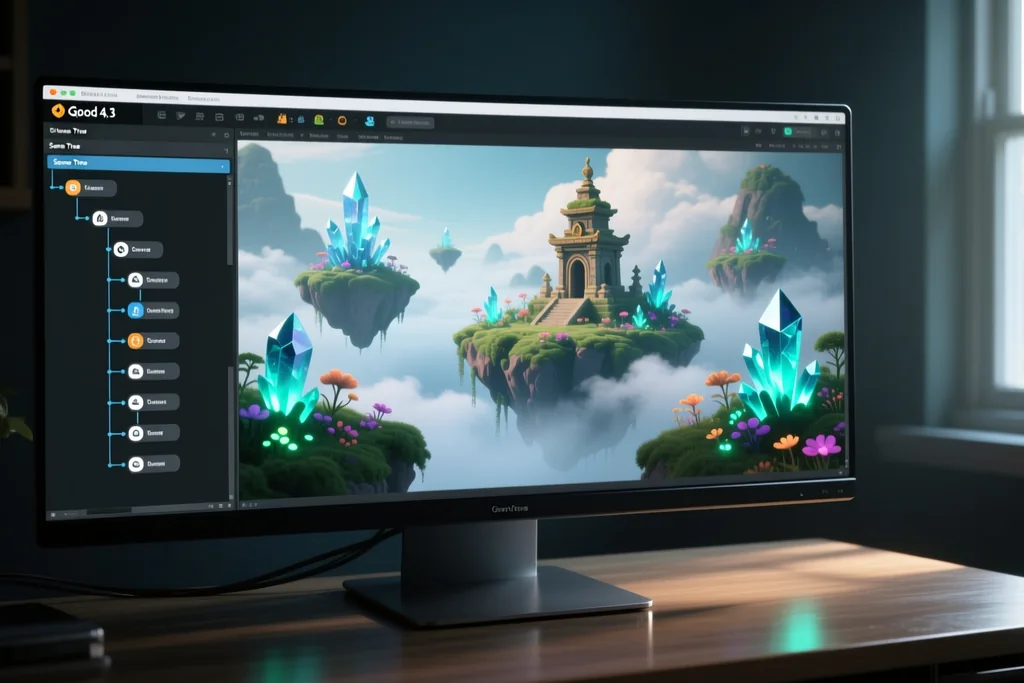
Godot 4 in 2026: ready for commercial game release?
Related guide on this topic.
The verdict on commercial readiness
Godot 4 in 2026 is ready for commercial release in the same way that a well-equipped workshop is ready to build furniture — it has all the essential tools, the workbench is sturdy, and the results depend on the craftsman. It is not ready for every commercial project, and pretending otherwise would be dishonest. It is not ready for AAA 3D games, for complex online multiplayer, or for console-first development without third-party porting. It is ready for 2D games of any scope, for stylized 3D games, for PC and mobile releases, and for any project where the zero-cost, open-source licensing model provides a business advantage that outweighs the engine's limitations. The developer who chooses Godot with open eyes — understanding both what it does well and what it does not do — will find an engine that is not just commercially viable but commercially advantageous. The developer who chooses it expecting it to be Unity or Unreal will be disappointed. Godot 4 in 2026 is not a replacement for the commercial engines — it is an alternative, and for the right project, it is the better one.
Read next
Ver la sección Engines & Tools
Engines that suit solo developers: a practical comparison
What decides which engine carries a single developer.
 Engines & Tools
Unity vs Unreal for 2D games in 2026: which saves time
Choosing between Unity and Unreal for 2D game development in 2026? Compare workflow, rendering, pricing, and real development time to pick the right engine.