Six playtesters sit in a room. They have been playing the same level for forty minutes. Three of them have died at the same boss encounter nine times. One has put the controller down and is checking their phone. Another is sighing audibly on every respawn. The sixth is still trying, but their movements have become mechanical and joyless — they are no longer learning, they are enduring. The designer watching through the glass takes notes: "boss too hard, reduce health by 30%." But the note is wrong. The boss is not too hard. The playtesters are too burned out to provide useful feedback, and the data being collected from their suffering is contaminated by fatigue, frustration, and the simple human fact that nobody plays well when they have been failing at the same thing for half an hour. Difficulty balancing is one of the hardest jobs in game design, and the way most studios approach it — repeated playtests with diminishing returns — is also one of the most wasteful. There is a better way, and it does not require burning through your playtesters like firewood.
The problem with traditional playtest-driven balancing
The standard approach to difficulty balancing in game development is iterative playtesting: build the level, bring in testers, watch them play, adjust the difficulty based on their experience, repeat. This approach works in theory but breaks down in practice for reasons that are predictable and avoidable.
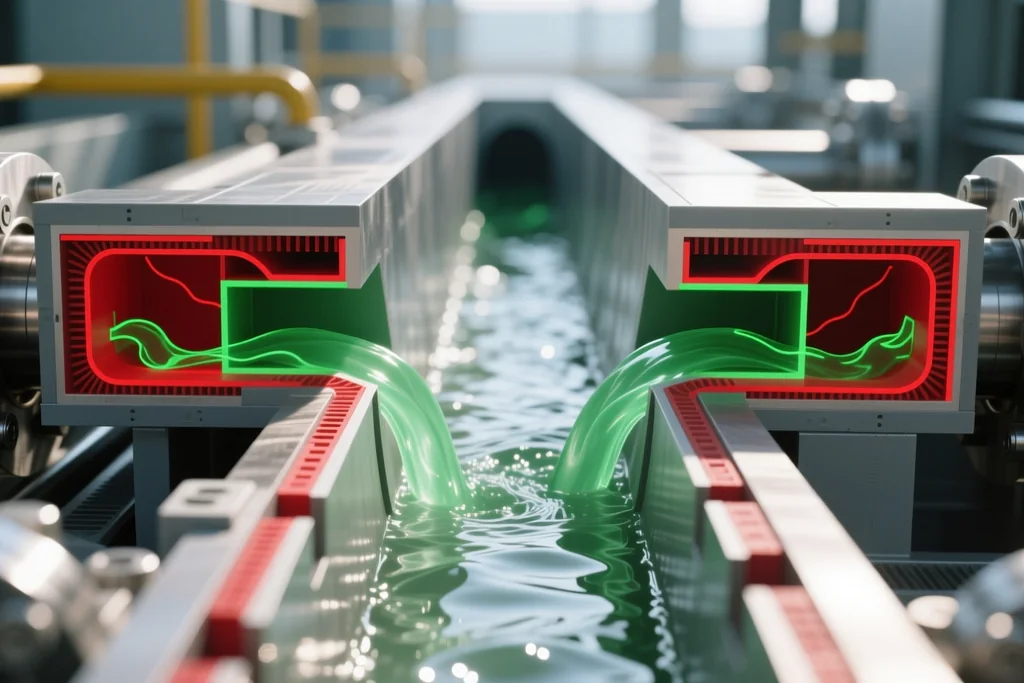
Playtester fatigue and contaminated data
Playtesters are human beings with finite patience. When a tester dies at the same encounter five times, their sixth attempt is not the same as their first — they are frustrated, fatigued, and potentially disengaged. Data collected from a frustrated tester is not representative of how a real player will experience the game, because a real player encounters the challenge fresh, with full attention and motivation. The tester who has been playing for an hour is providing data about their exhaustion, not about the game's difficulty.
This contamination is compounded by the iterative nature of the process. Each playtest round produces adjustments, which require a new playtest round, which produces more adjustments. The playtesters who participate in multiple rounds develop familiarity with the game that real players will not have — they become expert at a game that is designed for novices, and their feedback drifts further from the target audience's experience with every session.
The cost of over-testing
Every playtest session costs time and resources. Recruiting testers, scheduling sessions, preparing builds, observing playthroughs, and analyzing feedback consumes hours that could be spent on development. When playtests are the primary balancing tool, the balancing phase of development expands to fill all available time, and the quality of the balancing does not improve proportionally — it plateaus, because the feedback becomes less useful with each round.
A framework for difficulty without burnout
The alternative to playtest-driven balancing is not to eliminate playtesting — it is to reduce dependency on it by building a data-driven foundation that makes each playtest session more productive and less frequent. The framework has three layers: quantitative telemetry that captures what players actually do, qualitative observation that captures how they feel, and adaptive systems that reduce the need for manual tuning by letting the game respond to player performance.
Layer 1: Telemetry as the primary data source
Telemetry is the automated collection of gameplay data — death locations, completion times, retry counts, item usage, movement patterns — that tells you what is happening without requiring a human observer. A well-instrumented game generates data from every play session, whether it is a formal playtest or an internal build played by a team member, and that data is more reliable than observer notes because it is not subject to interpretation bias.
Telemetry does not replace playtesting — it replaces the repetitive, low-value playtesting that exists only to gather data that could be gathered automatically. When telemetry shows that 80% of players die at a specific encounter three or more times, the designer does not need a playtest to confirm the problem — they need a playtest to understand why the problem exists and whether the solution they designed works.
Layer 2: Targeted qualitative observation
With telemetry identifying problem areas, playtesting becomes targeted rather than exploratory. Instead of watching a tester play through an entire level, the designer brings in a tester, places them at the specific encounter that telemetry flagged, and watches them attempt it with fresh eyes. The session is short — ten to fifteen minutes — and the tester is not fatigued, because they have not been playing for an hour before reaching the problem area.
Targeted observation captures what telemetry cannot: the player's emotional state, their decision-making process, and the specific moment where the difficulty becomes unfair. A telemetry spike at a boss fight tells you players are dying; a targeted observation tells you they are dying because they cannot see the tell for the boss's attack and are reacting too late. The first data point identifies the problem; the second identifies the solution.
Layer 3: Adaptive difficulty systems
Adaptive difficulty — systems that adjust challenge based on player performance — reduces the need for perfect balancing by allowing the game to compensate for the range of player skill levels that a single difficulty setting cannot accommodate. This is not the same as "easy mode" or "the game plays itself" — well-designed adaptive systems are invisible to the player and maintain the challenge at the edge of their ability, which is the zone where games are most engaging.
Building a telemetry system that actually works
Telemetry is only as useful as the data it collects, and collecting the wrong data — or too much data — creates noise that obscures signal. A well-designed telemetry system collects specific, actionable data points that map directly to design decisions.
Core metrics for difficulty balancing
The metrics that matter for difficulty balancing are not the metrics that matter for monetization or engagement. Difficulty balancing requires data about player failure and recovery — where they fail, how often, and whether they persist or quit.
Death location and frequency is the most basic and most valuable metric. Every time a player dies, the game logs the location, the cause, and the attempt number. Aggregating this data across play sessions produces a heatmap that immediately reveals difficulty spikes — areas where deaths cluster disproportionately. A single playtester's experience at a difficult encounter is anecdotal; twenty internal play sessions aggregated into a heatmap is data.
Completion time per segment measures how long players spend on each section of the game. A segment that takes three times longer than adjacent segments is a difficulty spike, even if it does not produce many deaths — it may be a puzzle that players spend time solving, or a stealth section that requires multiple retries without dying. Time data captures difficulty that death data misses.
Retry count per encounter measures persistence. If players retry an encounter four times and then succeed, the difficulty is appropriate — challenging but achievable. If they retry ten times and succeed, the difficulty is too high for most players. If they retry twice and quit, the difficulty is either too high or the encounter is not fun enough to warrant persistence.
Input frequency and accuracy captures player behavior at a granular level. A player who is mashing buttons is panicked; a player who is making precise, deliberate inputs is engaged. This data is more complex to collect and interpret, but it reveals whether difficulty is creating positive stress (engagement) or negative stress (panic).
The flow channel: where difficulty should live
The concept of the flow channel, developed by psychologist Mihaly Csikszentmihalyi, is the theoretical foundation for difficulty balancing. Flow is the state of optimal engagement where a player's skill matches the challenge — the game is neither too easy (boredom) nor too hard (anxiety). The flow channel is the band of challenge levels where a given player is in flow, and the designer's job is to keep the game within that channel.
The dynamic nature of the flow channel
The flow channel is not static — it widens as players improve. A player who has mastered the basic mechanics has a wider tolerance for challenge than a player who is still learning. This means that early-game difficulty must be more tightly controlled than late-game difficulty, because early players are at the narrowest part of their flow channel and have the least tolerance for deviation.
The flow channel also shifts within a single play session. A player who has been playing for two hours is fatigued, and their effective skill level has dropped — their flow channel has narrowed. A difficulty spike that would be appropriate at hour one may be too hard at hour two, not because the game changed but because the player did. This is why the hardest encounters in well-balanced games are placed early in sessions or after rest points, not at the end of long, exhausting levels.
Structuring difficulty across the game
Balancing individual encounters is only half the job. The other half is structuring difficulty across the entire game — the macro-level pacing that determines whether the player's journey feels like a rising crescendo or an erratic roller coaster. Macro-level difficulty structure is where many games fail, because designers focus on individual encounters and neglect the rhythm of the overall experience.
To understand how difficulty should be structured across a game's progression, it helps to map the typical difficulty curve against player skill growth and the emotional response each zone is designed to elicit.
The relationship between challenge level, player skill, and emotional response defines the structure of a well-balanced game, and mapping these zones against game progression reveals where adjustments are needed.
| Game phase | Challenge level vs. skill | Emotional response | Design goal | Typical failure mode |
|---|---|---|---|---|
| Tutorial / intro | Challenge below skill | Confidence, curiosity | Teach mechanics without pressure | Over-tutorializing; treating player as incompetent |
| Early game | Challenge at skill | Engagement, learning | Establish core loop; gradual ramp | Flat difficulty; no growth sense |
| Mid game | Challenge slightly above skill | Focused effort, occasional frustration | Introduce complexity; test mastery | Difficulty plateau; monotony |
| Late game | Challenge at peak skill | Flow, mastery, satisfaction | Combine all mechanics; reward expertise | Difficulty cliff; spike without buildup |
| Final challenge | Challenge above skill (briefly) | Tension, climax | Create memorable peak; resolution | Anti-climax; final boss easier than mid-game |
| Post-climax | Challenge below skill | Relaxation, reflection | Wind down; let player savor mastery | Abrupt end; no breathing room |
This structure reveals that the most common difficulty balancing failure is not a single encounter that is too hard — it is a structural problem where the difficulty curve does not match the player's skill growth curve. A game that ramps difficulty faster than players can improve creates anxiety and abandonment. A game that ramps difficulty slower than players improve creates boredom and disengagement. The designer's job is to match the two curves, and telemetry is the tool that reveals whether they are matched.
Playtesting without burnout: protocols that work
With telemetry handling data collection and targeted observation handling qualitative insight, playtesting becomes a focused, efficient activity that does not burn out testers. The key is structuring playtest sessions to maximize the value of each participant's time and attention.
A well-structured playtest protocol respects the tester's finite patience and extracts maximum insight from minimum playtime. The following principles define a protocol that produces actionable data without exhausting the people providing it.
Principles for structuring burnout-free playtest sessions:
- Segment testing over full playthroughs — instead of having testers play the entire game, place them at specific segments that telemetry has flagged. A tester who plays a fifteen-minute segment fresh provides better data than one who plays a two-hour session and is exhausted by the end.
- Fresh tester for each difficulty change — never use the same tester for two iterations of the same encounter. A tester who has seen version one of a boss fight carries expectations into version two that color their experience. Each iteration needs fresh eyes.
- Cap session length at thirty minutes — human attention and patience degrade rapidly after thirty minutes of focused play. Sessions longer than this produce contaminated data from fatigued testers. Multiple short sessions with different testers are more valuable than one long session.
- Separate skill-level cohorts — recruit testers of different skill levels and test each encounter with each cohort. An encounter that is appropriate for skilled players may be impossible for casual players, and both audiences need to be served. Label testers as beginner, intermediate, or expert based on their performance in a calibration segment, not on their self-assessment.
- Observe emotional responses, not just gameplay — the tester's body language, facial expressions, and verbal reactions are data. Frustration, confusion, boredom, and excitement are visible if the observer is watching for them. Record the session and review the tester's face, not just the screen.
- Use the think-aloud protocol selectively — asking testers to narrate their thought process is valuable for understanding decision-making, but it also changes the way they play — they become more deliberate and less instinctive. Use think-aloud for puzzle and strategy segments, but let action segments be played in silence so the tester's reflexive behavior is not altered.
- Always end with an interview — after the play session, conduct a short interview asking what they enjoyed, what frustrated them, and what they would change. The interview captures insights that observation misses, because players often have accurate intuitions about problems but cannot articulate them while playing.
- Rotate tester pools — maintain a pool of at least twenty testers and rotate them so no tester participates more than once every two weeks. This prevents familiarity bias and ensures that each session uses fresh eyes.
The cumulative effect of these principles is a playtesting program that produces higher-quality data per session, requires fewer sessions, and does not exhaust the tester pool. A studio that implements this protocol can balance a game with half the playtest sessions of a traditional approach, because each session is more productive and the telemetry handles the repetitive data collection that traditional playtesting was doing poorly.
Adaptive difficulty: the invisible safety net
Even with perfect telemetry and targeted playtesting, a single difficulty setting cannot serve the full range of player skill levels. Some players will find the balanced difficulty too easy; others will find it too hard. Adaptive difficulty systems address this gap by adjusting the challenge in response to player performance, creating a personalized experience that stays within each player's flow channel.
Designing invisible adaptation
The cardinal rule of adaptive difficulty is that the player must not perceive it. If a player notices the game getting easier after they fail, they feel patronized — the game is "dumbing down" for them. If they notice the game getting harder after they succeed, they feel punished for being good. The adaptation must be subtle enough to feel like the natural result of the player's improving skill, not like a system adjusting dials behind the curtain.
Invisible adaptation works by adjusting parameters that the player cannot easily quantify. Reducing enemy health by 10% after three deaths is noticeable if the player is counting hits. Reducing enemy reaction time by 50 milliseconds is not. Slightly increasing the window for a parry by 2 frames is not. Adjusting the drop rate of healing items in a difficult section is not — players attribute it to luck. The art of invisible adaptation is choosing parameters that affect difficulty without being measurable by the player.
What to adapt and what to leave alone
Not all parameters should be adapted. The core mechanics — how the character moves, how attacks work, what buttons do — must be consistent for all players at all times. Adapting core mechanics creates an inconsistent experience that prevents players from developing mastery. The parameters that should be adapted are the challenge parameters — enemy stats, timing windows, resource availability, and encounter composition.
Enemy health, damage output, reaction time, and accuracy are the most common adaptation targets. Healing item availability, checkpoint frequency, and hint system activation are secondary targets. The key is that the adaptation should feel like the game is responding to the player's situation, not like the game is changing the rules. A player who finds a healing item right after a difficult fight attributes it to exploration or luck. A player who notices that enemies suddenly die in fewer hits attributes it to the game helping them — and that attribution breaks the illusion.
The role of difficulty options and accessibility
Adaptive difficulty is not a substitute for explicit difficulty options. Some players want to choose their challenge level — to opt into a harder experience for the satisfaction of overcoming it, or to opt into an easier experience because they are playing for story, not for challenge. Explicit difficulty options respect player agency in a way that invisible adaptation cannot.
Designing meaningful difficulty options
Difficulty options that simply scale enemy health and damage are the least useful implementation, because they do not change the fundamental challenge — they just make it more or less time-consuming. Meaningful difficulty options change the nature of the challenge. A "story mode" that reduces enemy aggression and increases healing item availability changes the experience from "survive" to "progress," which is a different game, not the same game with bigger numbers. A "hard mode" that adds new enemy types or removes checkpoints changes the strategic demands on the player, not just the statistical ones.
The most respectful approach to difficulty options is to allow the player to customize individual parameters rather than choosing a global difficulty. Let the player choose enemy damage, enemy health, checkpoint frequency, and puzzle hint availability independently. This granular approach respects the diversity of player preferences — a player who wants challenging combat but easy puzzles, or vice versa, can configure the game to their taste.
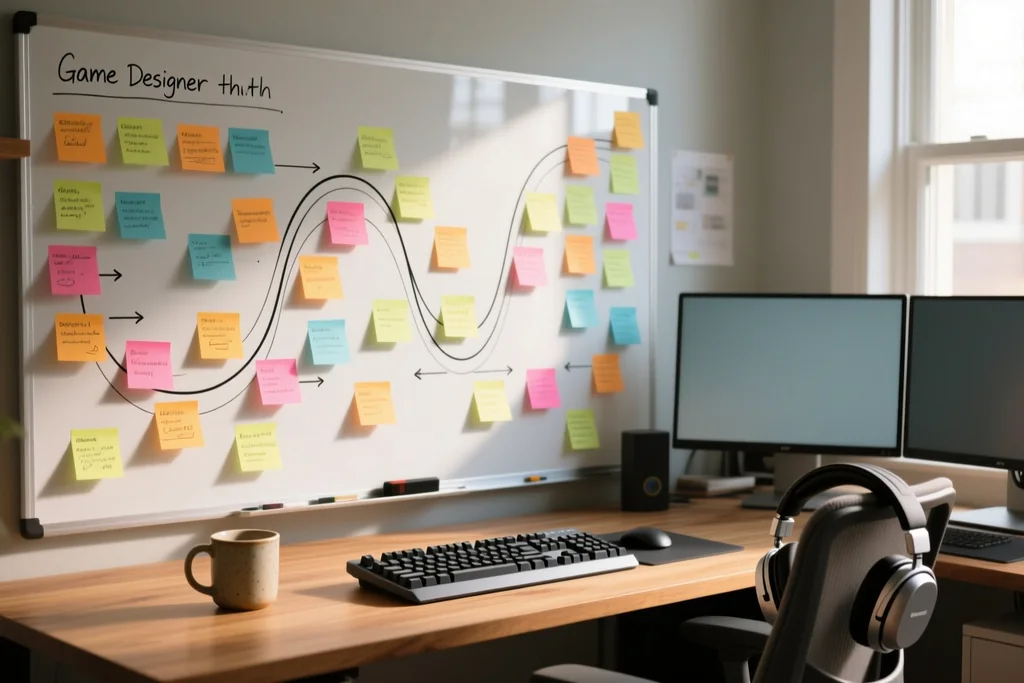
Balancing difficulty without playtester burnout
Related guide on this topic.
When to stop balancing
Knowing when to stop balancing is as important as knowing how to balance. A game can be balanced indefinitely — there is always a player who finds it too hard, always an edge case that produces an unexpected death, always a tester who struggles where others succeed. The pursuit of perfect balance is a trap that consumes development time without producing proportional improvement.
The stopping criterion is not perfection — it is statistical sufficiency. When telemetry shows that 85% of players complete each encounter within a target retry range (for example, 1 to 5 attempts for standard encounters, 3 to 10 for bosses), the balancing is sufficient. The remaining 15% includes players who are far above or below the target skill range, and no amount of balancing will serve them — they need difficulty options or adaptive systems, not another round of manual tuning.
The developer who recognizes this stopping point ships a game that is well-balanced for the majority of players and supported by adaptive systems for the rest. The developer who does not recognize it spends months chasing a diminishing returns curve, burning through playtesters, and delaying the release for improvements that fewer and fewer players will notice. Balance is not perfection — it is sufficiency, and sufficiency is a decision, not a destination.
Read next
Ver la sección Design & Playtesting
Game feel and juice: why controls matter more than art
Discover what makes game controls feel good. Learn game feel, juice, screen shake, hitstop, input buffering, and why polish matters more than graphics.
 Design & Playtesting
Scope for a first release: how to cut without killing the idea
Protect the core loop and postpone everything that is not the hook.